Full Basement Waterproofing in Louisville, KY
Full basement waterproofing in Louisville, KY usually means a drain and sump system built inside the basement, a membrane applied to the outside of the wall, or a mix of the two. This free referral service hands your request to one independent local contractor, who visits, explains the options and prices them in writing.
Prefer to talk? Call now(502) 555-0164Not sure if we cover your area? Check now ↓
Basement Estimate Request
Takes 30 seconds, or call (502) 555-0164
Your details go to one independent contractor who works around Louisville, KY, and that contractor calls you directly. See our Referral Marketing Disclosure.
Keeping Groundwater Out for Good
Much of Louisville sits on river sand and gravel, and the water in that ground moves. The U.S. Geological Survey measured downtown water levels climbing as much as 32 feet between 1972 and 1977, a rise it warned could cause wet basements. State geologists at the Kentucky Geological Survey also map sinkholes and springs, the marks of karst, across parts of Jefferson County.
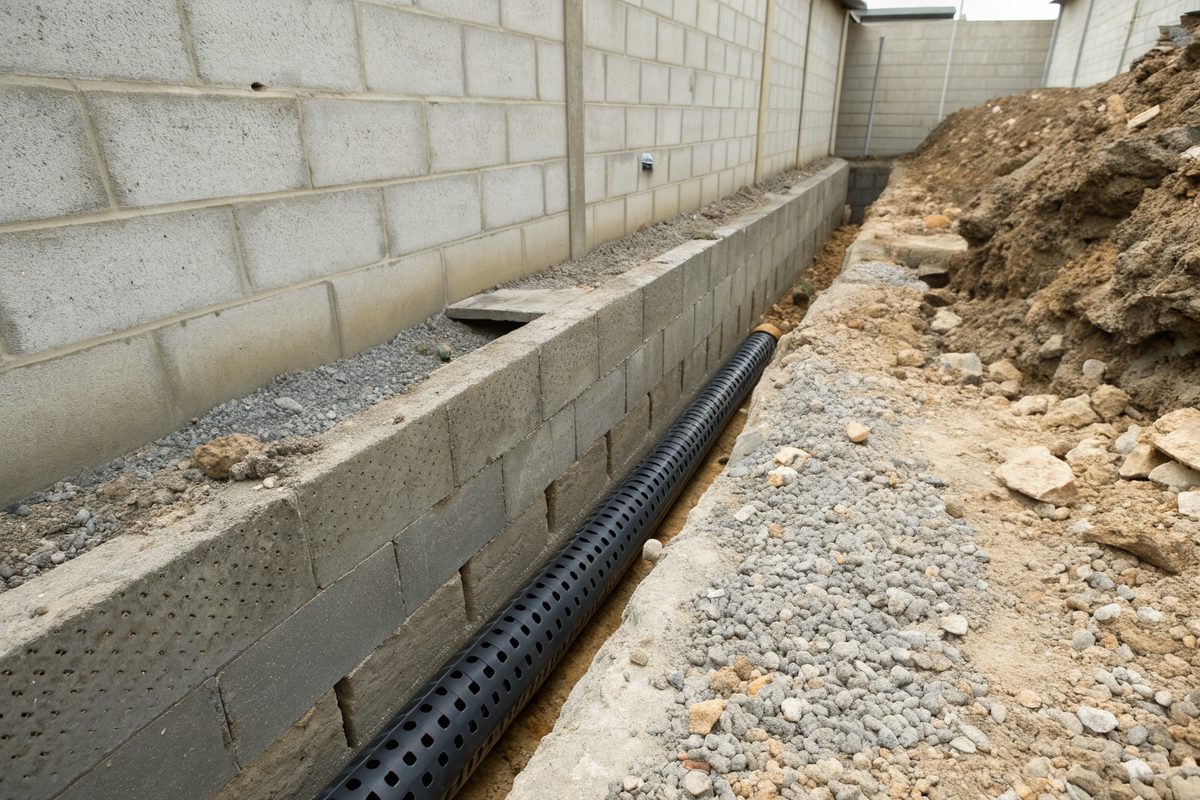
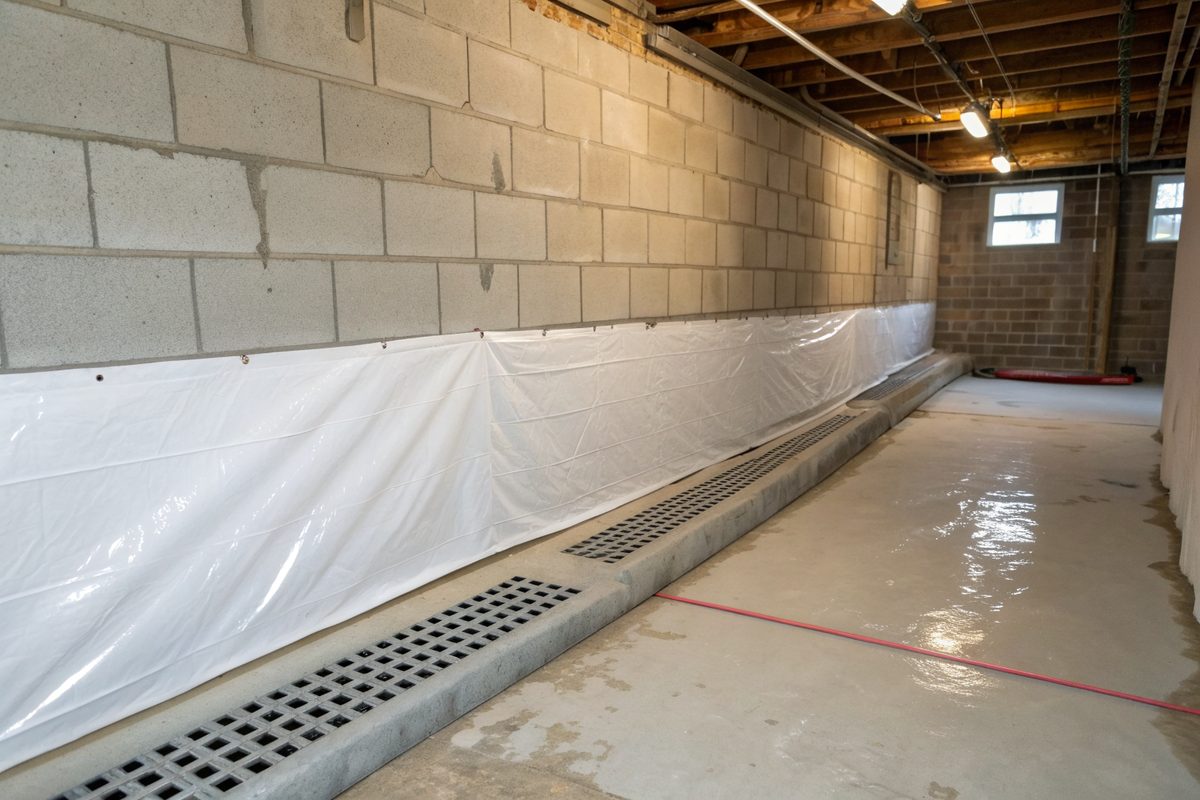
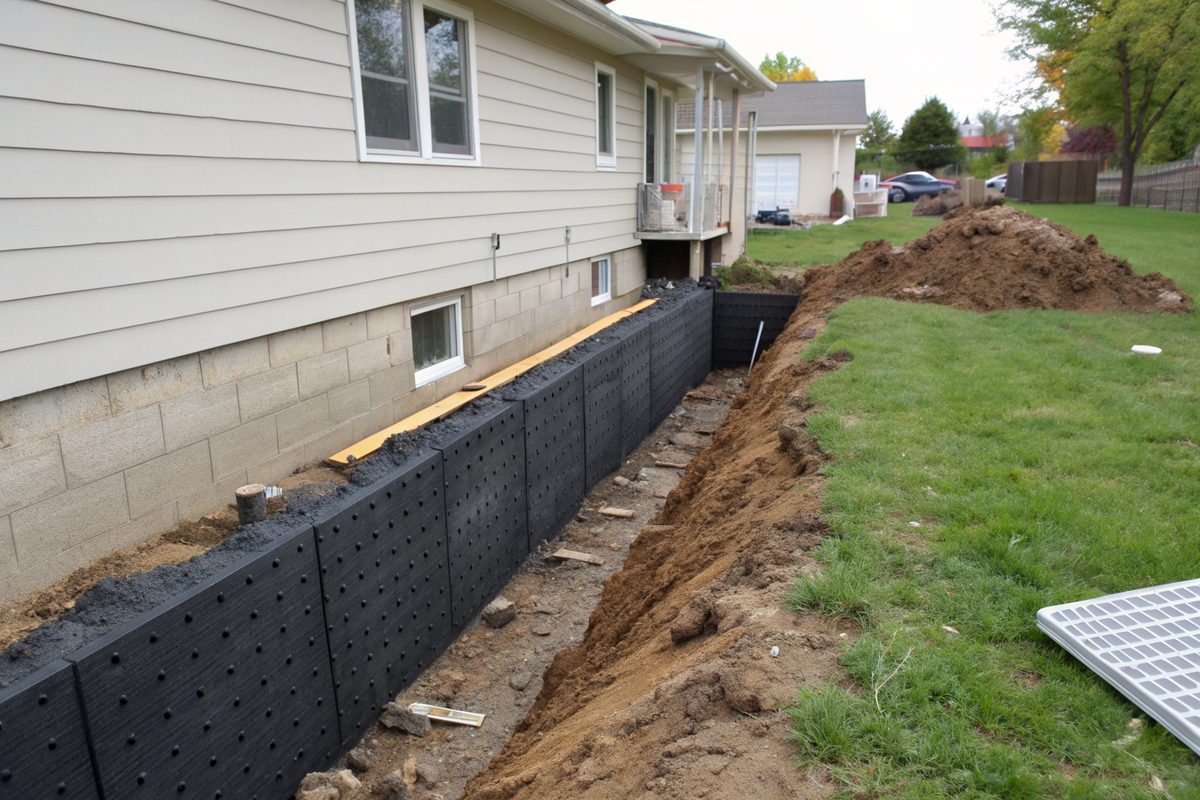
There are two broad routes. An interior system cuts a trench along the inside edge of the floor, lays perforated pipe in gravel and carries water to a sump pit, where a pump lifts it outdoors. An exterior system means digging to the footing and coating or wrapping the wall in a membrane, often with drain tile at the base. Inside work spares the yard; outside work stops water at the wall face but needs room to dig.
Wall type shapes the plan. Poured concrete tends to leak at cracks, form-tie holes and the cove joint where wall meets slab. Concrete block has hollow cores that fill and release water low on the wall, so some systems add weep holes in the bottom course. Older stone foundations in neighborhoods such as the Highlands often leak through tired mortar.
Waterproof paint can tame light dampness, but an inside coating rarely holds back water that saturated soil is pushing through, since the pressure comes from behind. Vapor barriers and dehumidifiers are add-ons, not substitutes.
When Homeowners Ask for Basement Waterproofing
- Interior perimeter drains. A drain channel along part or all of the floor edge, feeding a sump pit.
- Sump pit and pump. A new pit, pump and discharge line, sometimes with a battery backup and a high-water alarm.
- Exterior membranes. Excavating along a wall to coat or wrap it, where the yard allows digging.
- Block wall drainage. Weep holes and a dimpled liner that guide water from block cores down to the drain.
- Vapor barriers and dehumidifiers. Sheeting and a self-draining unit that keep a dried-out basement comfortable.
What It Usually Costs
| Cost row | Figure | Source (year) |
|---|---|---|
| Typical basement waterproofing project | about $3,000 to $10,000 (average about $5,000) | Fixr national (2026) |
| Interior perimeter drain, per linear foot | $40 to $120 | Fixr national (2026) |
| Sump pump installation | $600 to $2,500 | Fixr national (2026) |
| Epoxy crack injection, per crack | $250 to $1,000 | Fixr national (2026) |
| Waterproof paint or sealant, per sq ft | $1 to $8 | Fixr national (2026) |
These rows are national; research turned up no current Louisville-only figure. With a median owner home value of $233,900 in Louisville/Jefferson County Metro (Census), a full system is a big purchase, so read the scope line by line. The cost guide covers what moves a price, and the calculator roughs out drain length.
What Happens on Job Day
- Describe the basement. Note which walls get wet, how often and what they're built from.
- One contractor calls. A single independent local contractor sets up a visit.
- A written estimate. It should spell out the method, drain footage and pump.
- Paperwork first. Ask who pulls permits, which local license the contractor holds, and for proof of liability coverage and workers' comp.
- The install. Typically a strip of floor is broken out, pipe and gravel laid, the pit set and the concrete patched.
- Test it. Watch the sump after the next soaking rain.
Why Start With One Request
A single form puts you in touch with one contractor, not a string of sales calls. Using this site is free, you get nothing in return, and contractors may pay it for advertising. The site itself is no contractor: it never visits a basement, quotes a price or does any work.
Kentucky has no statewide license for this kind of work. In Louisville Metro, only a contractor holding a Metro building license, or the owner, can pull a building permit, so ask which license the contractor holds and confirm it with Construction Review at (502) 574-3321. Any plumbing piece needs a Kentucky-licensed plumber and a state permit. Before signing, make sure the paperwork names the drain route and its length in feet, the make and model of pump, the spot where discharge water exits, and the warranty's coverage and transferability.
Frequently Asked Questions
Does a full system need a permit in Louisville?
Louisville Metro doesn't publish a clear answer for interior drains or wall work, so ask your contractor and Construction Review at (502) 574-3321 before the job starts. If the work touches plumbing, that permit comes from the state and goes only to a licensed master plumber or an owner living in the home.
Where should the sump pump discharge go?
Outdoors, to a spot where the water drains off instead of circling back to the foundation. In Jefferson County, MSD says tying a sump pump into the sewer is illegal and adds a $75 monthly surcharge until the connection comes out, so make sure the contract names the discharge point.
Will a dehumidifier alone dry out my basement?
A dehumidifier pulls moisture from the air, which helps with a musty smell and condensation on cool walls. It can't stop water that runs in along the floor after storms. Many owners use one alongside a drain system rather than in place of it.
What should I look for in the warranty?
Check whether it covers the drain, the pump or both, how many years it runs and whether it passes to a buyer if you sell. Ask who services the system and what a visit costs, and file the written terms with your house papers.
Services That Often Go Together
A full system often pairs with sump pump installation and foundation crack repair, while smaller problems may only need basement leak repair or outdoor basement drainage.
Start Your Waterproofing Request
Share how the water shows up and roughly how big the basement is. One independent local contractor will get in touch to set up a visit and a written estimate, and hiring is entirely your decision. You can also call (502) 555-0164.